Think Before You Click: Phishing Email Simulation
Audience: New Employees
Responsibilities: Instructional Design, eLearning Development, Action Mapping, Storyboarding, Visual Design, Authoring
Tools Used: Articulate Storyline 360, Figma, MindMeister, Canva, Google Docs
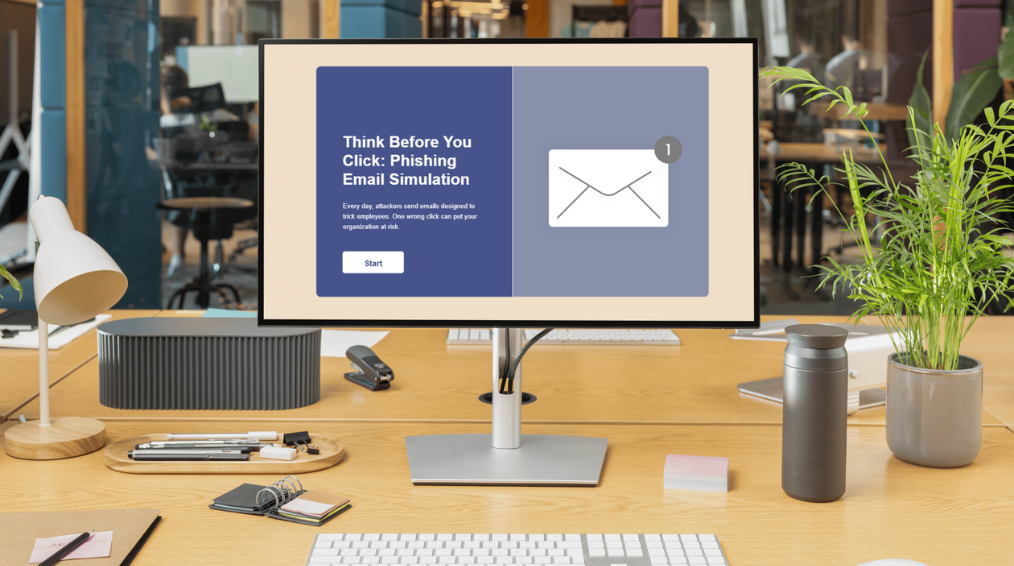
Problem
With phishing email scams becoming more challenging to detect, employees struggle to identify and report suspicious emails. Phishing email scams can lead to data breaches, harming both the employee and company.
Solution
After identifying the problem, I determined the cause was due to a lack of knowledge. I designed a scenario-based interactive eLearning project that features three email scenarios to help employees learn how to identify phishing attempts and take appropriate actions in a risk-free environment.
Process:
To create an effective learning experience, I followed the ADDIE instructional design model to guide each phase of development. Beginning with research and performance analysis, I identified the behaviors learners needed to demonstrate before translating those findings into an action map, storyboard, and visual designs. Throughout development, I refined the experience through prototyping, implementation, and evaluation to create an engaging, learner-centered phishing awareness simulation.
Action Mapping
Because this was an independent portfolio project, I conducted the research typically provided by a subject matter expert. I reviewed current phishing trends using reports from the Anti-Phishing Working Group (APWG) and the FBI Internet Crime Complaint Center (IC3) to identify the most common phishing tactics affecting organizations.
Based on this research, I determined that learners needed to develop three essential behaviors: verify email authenticity, avoid engagement, and report suspicious emails. These performance goals became the foundation of the action map and guided every design decision throughout the project.
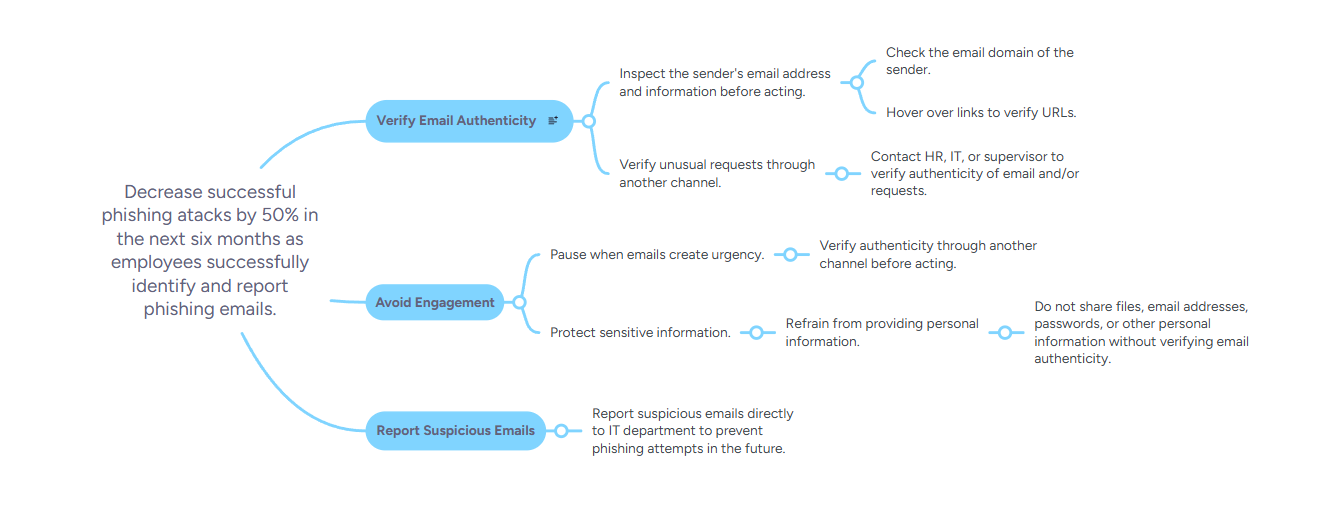
Key Design Decision
Rather than teaching learners to memorize phishing indicators, I designed realistic workplace scenarios that required them to evaluate evidence, make decisions, and experience the consequences of their choices. This approach encourages learners to apply critical thinking in situations that mirror the workplace.
Research Sources
Anti-Phishing Working Group. Phishing Activity Trends Report
Federal Bureau of Investigation. Internet Crime Complaint Center (IC3). Annual Internet Crime Report
Text-Based Storyboard
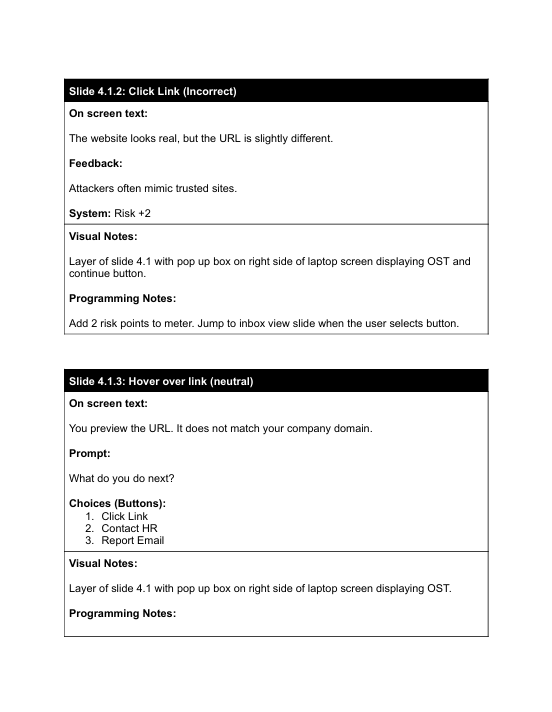
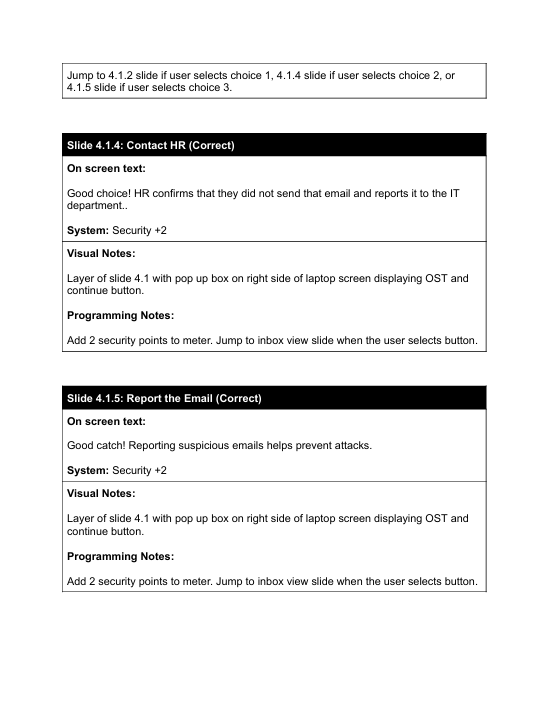
Before development, I created a detailed storyboard containing screen layouts, learner interactions, programming notes, and feedback logic. Planning the experience in advance ensured that the scenarios, branching paths, and scoring aligned with the learning objectives before development began.
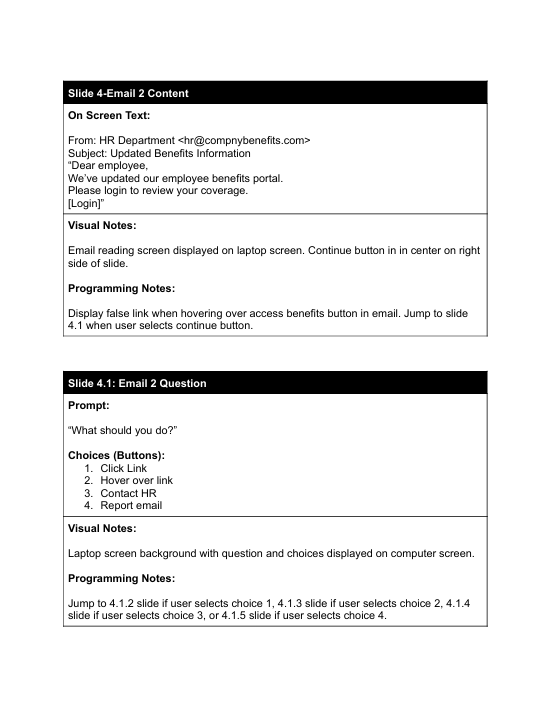
Excerpt of Storyboard
Visual Mockups
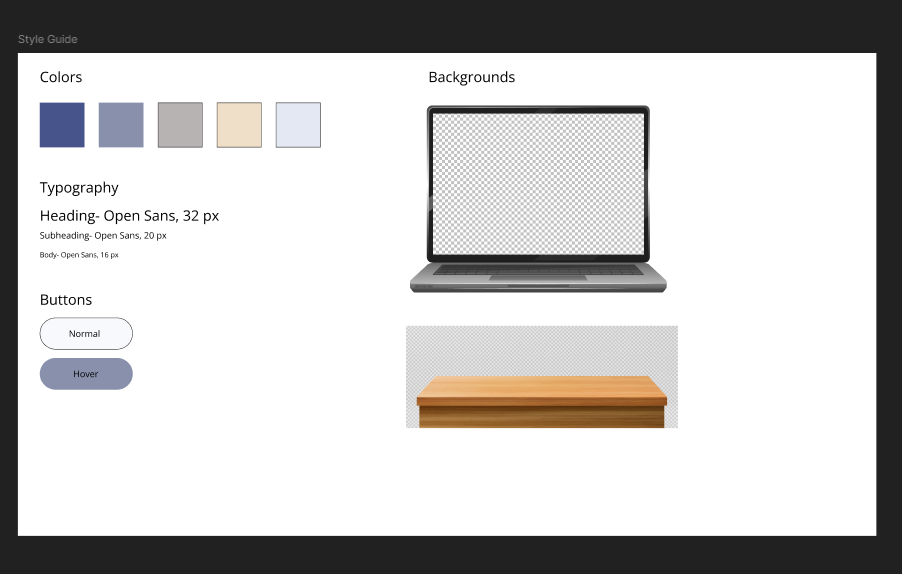
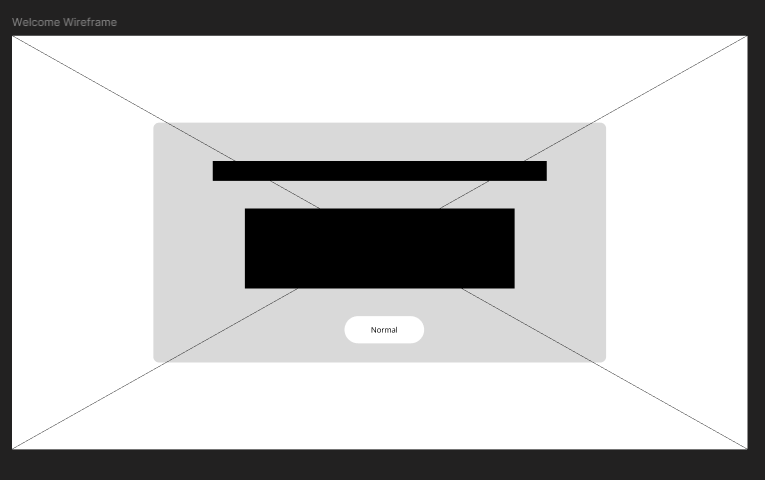
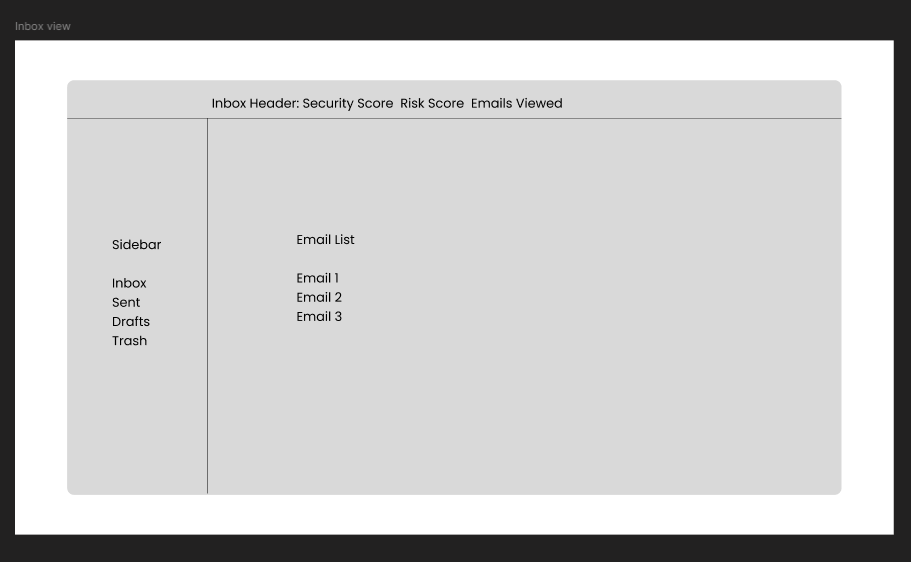
To establish a consistent visual identity, I developed mockups in Figma before building the course in Storyline. Creating layouts early allowed me to refine the learner experience, establish navigation patterns, and ensure consistency throughout development.
Created a project style guide for colors, typography, and layout
Designed wireframes for key learner interactions
Refined interface layouts before development in Storyline
Interactive Prototype
I developed an interactive prototype to validate functionality and gather feedback before full development. User feedback revealed that learners needed clearer instructions during onboarding and greater visibility of the Help Guide.
Based on this feedback, I refined the introduction, expanded the instructional content, and added visual cues to improve learner guidance before continuing development.
Full Development
After incorporating prototype feedback, I developed the complete simulation in Articulate Storyline 360.
Key features included:
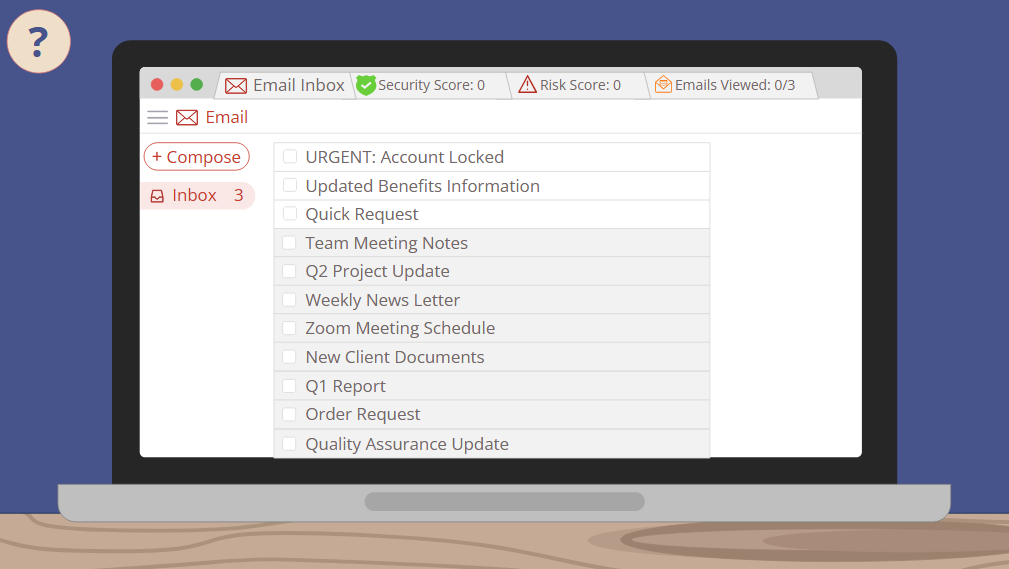
Interactive email inbox
Branching decision paths
Dynamic variables and triggers
Security and risk scoring
Personalized feedback
Accessibility considerations
Results & Takeaways
Project Outcomes
This project demonstrates my ability to apply the instructional design process from initial analysis through implementation. By creating realistic phishing scenarios, branching interactions, and personalized feedback, I designed an engaging learning experience that encourages learners to practice recognizing phishing attempts and making informed security decisions in a risk-free environment.
What I Learned
Developing this project strengthened my skills in instructional design, Storyline development, interaction design, and iterative problem-solving. Throughout the process, I gained experience creating action maps, storyboards, visual mockups, interactive prototypes, and complex Storyline variables and triggers while refining the learner experience based on testing and feedback.
Future Improvements
Given additional development time, I would enhance this project by implementing an LMS-compatible learner tracking system using xAPI or SCORM reporting. This would allow organizations to capture learner performance data—such as completion status, quiz responses, security and risk scores, and common decision patterns—to evaluate learning outcomes and identify areas where additional training may be beneficial.
I would also consider expanding the simulation with additional phishing scenarios, adaptive feedback, and more advanced branching paths to provide learners with an even more realistic and personalized learning experience.